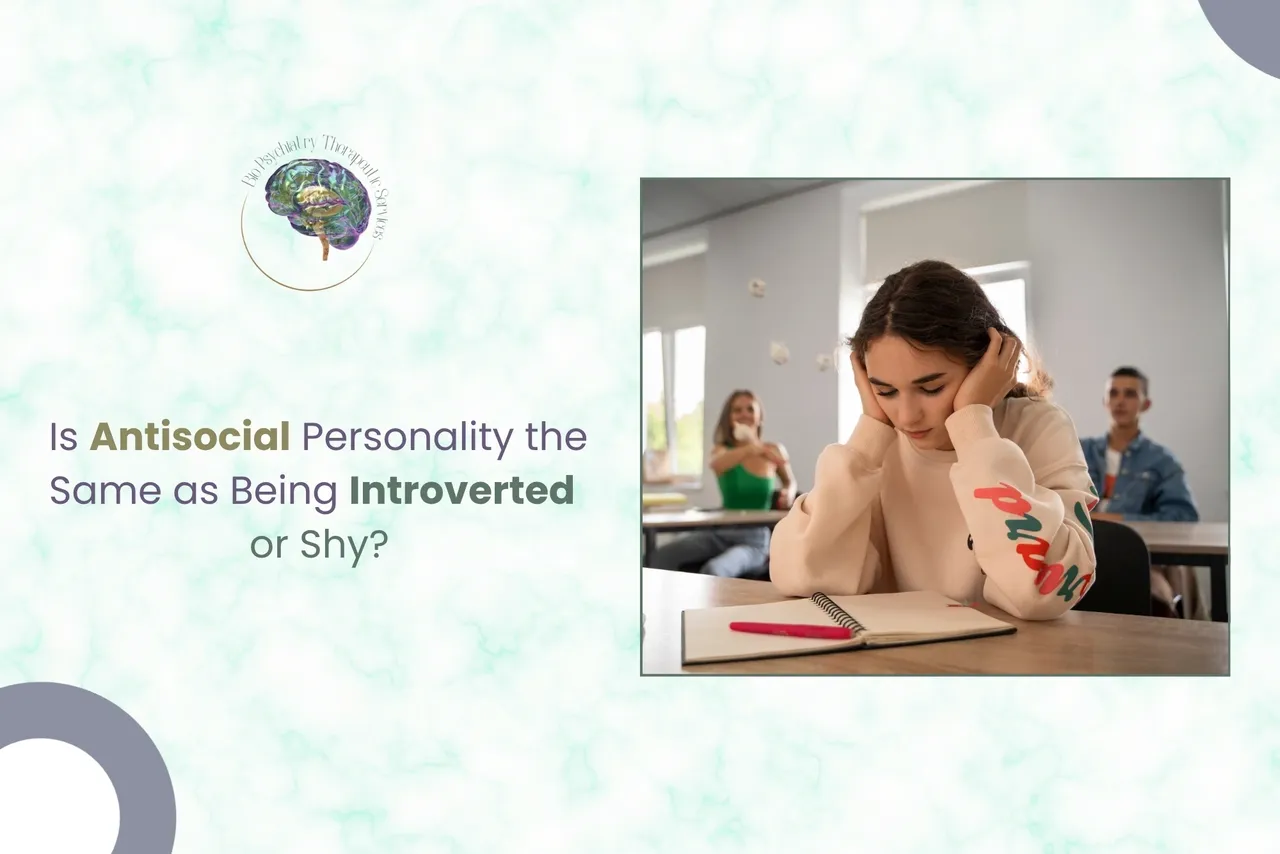
Many people wonder if someone with an antisocial personality is just quiet, shy, or likes to be alone. The short answer is no. These are very different things. Here, we explain the differences in simple terms. We also explain how we assist at Bio Psychiatry Therapeutic Services, LLC.
What Is Antisocial Personality Disorder?
Antisocial personality is a medical term for a pattern of behavior. People with this pattern may break rules a lot. They may hurt others or not care when others are hurt. They may lie or do risky things again and again. This pattern typically begins when someone is young and continues into adulthood. Doctors use special checklists to decide this.
What Does Introverted Mean?
Introverted people like calm time. They feel okay when they are alone. They may feel tired after being with many people. Introverts can care deeply for others. They can follow rules and be kind. Introversion is a normal way to be. It is not a disorder.
What Does Shy Mean?
Shy people feel nervous around new people. They may speak softly or look down. Shyness can make it hard to make friends. But shy people want to be good to others. They can learn to feel less nervous with practice. Being shy is not the same as hurting others.
How Are They Different?
- Intent: People with ASPD may hurt or use others on purpose. Introverts and shy people do not want to hurt others.
- Rules: People with ASPD may often break rules. Introverts and shy people usually follow rules.
- Feelings: People with ASPD may not feel bad when they hurt someone. Introverts and shy people feel bad if they hurt others.
- Need for Alone Time: Introverts choose alone time to rest. People with ASPD may be outgoing or charming when it suits them. Being alone does not mean someone has ASPD.
How We Help at Bio Psychiatry Therapeutic Services
We are here to help people and families. We do online care called tele-psychiatry. You can meet with us from home. We help with many needs, including:
- Psychiatric evaluations
- Individual therapy
- Group therapy
- Family therapy
- Medication management
- Patient education
Our team works with many conditions. Some of our specialties are ADHD, Autism, Borderline Personality, Antisocial Personality, Trauma, Depression, Sleep Problems, Eating Disorders, and more. We treat adults and children. We also help with life skills, grief, and school issues.
What to Expect in Care
When you start with us, we listen. We ask simple questions about how you feel and what you do. We make a plan that fits you. Therapy can teach new ways to handle feelings. Medicine can help when it is needed. We work with families, too. We want you to feel safe and seen.
When to Ask for Help
You should seek help if you or a loved one:
• Often breaks rules and gets in trouble.
• Hurts others or animals on purpose.
• Lies or tricks people to gain.
• Shows little care for others’ feelings.
• Feels out of control with anger or behaviors.
If you see these signs, reach out. Early help can make life safer and better.
How to Get Help with Us
- Visit our easy online schedule.
- Book a tele-psychiatry visit from home.
- Meet our provider at the time you choose.
- Get a simple plan for therapy or medicine.
We make care easy and kind. We will walk with you step by step.
A Word from Our Owner
Vida Robb, PMHNP-BC, leads our team. She believes in kind and trusting care. Vida says everyone is special and has value. She helps people set goals and find a brighter path. We share that hope with all our clients.
Simple Tips for Families
- Stay calm. Speak with simple words.
- Keep routines at home. Routines help kids and adults.
- Set clear rules and safe limits.
- Seek therapy for support and guidance.
- If you feel unsafe, get help right away.
Conclusion
Introversion and shyness are normal states of existence. This does not imply that an individual has an antisocial personality. Antisocial Personality Disorder is a severe problem that requires assistance. You should contact a professional in case you are concerned about somebody. At Bio Psychiatry Therapeutic Services, LLC, we’ll listen to you. We’re here to help you find the right care. You are not alone. We are here to help.
FAQs
Q. Can someone be both shy and introverted?
Yes. Some people are both. They may like quiet and also feel nervous around new people.
Q. How is antisocial personality different from being shy?
People with antisocial traits may hurt or use others. Shy people do not want to hurt anyone.
No comment