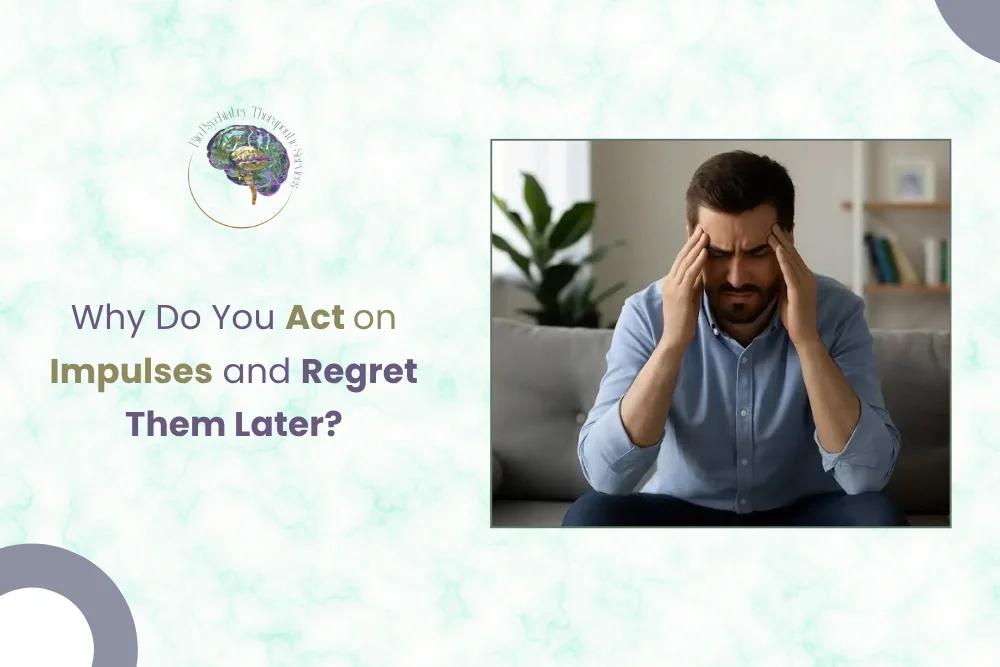
Have you ever bought a toy you did not need? Have you ever yelled at a friend and felt sad about it? That is called acting on an impulse. An impulse is a sudden urge to do something. You do not think about it first. You do it.
Later, you might wish you had not done it. That feeling is called regret. It is a very heavy and sad feeling. You might feel upset with yourself. You might feel embarrassed.
But you are not alone in this. Many people do things too fast. It is a normal thing that happens to all of our brains. You need to learn how your brain works.
Bio Psychiatry Therapeutic Services, LLC helps people understand these feelings and develop healthier ways to respond.
Let’s look at why you act on impulse and regret it later and how we can learn to slow down today.
What Is an Impulse?
An impulse is a very fast choice. It is a choice you make without looking at the rules. You do not look at the facts. You only look at what you want in that exact second.
Imagine you are walking in a store. You see a bright candy bar. You are not even hungry. But you grab it and buy it anyway. That is an impulse.
Think about a time you felt very angry. Someone took your favorite pen. Instead of using words, you grabbed it back and yelled. That is also an impulse.
Impulses can be small. They can be big. Sometimes they are harmless. But many times, they cause trouble. They make you spend all your money. They make you hurt people you love. They make you break the rules.
How Your Brain Works
To understand your choices, you must look at your brain. Your brain has different jobs to do. Your brain has two very important teams inside it.
The first team is the feeling team. This team is very fast. It cares about right now. It wants you to feel happy and excited this very second. It does not care about tomorrow.
The second team is the thinking team. This team is a bit slow. It likes to read the rules. It cares about tomorrow. It wants to keep you out of trouble.
When you see something exciting, the feeling team jumps up. It shouts to do it right now. Because the feeling team is so fast, it wins the race. You grab the candy. You yell. You buy the toy.
The thinking team takes a little longer to show up.
Why Do You Regret Them Later?
Regret is a visitor that comes after the smoke clears. Once the excitement of the quick choice goes away, your thinking brain wakes back up. It looks at what the feeling team just did and says, “Oh no, we should not have done that.”
Regret can feel heavy. It can make your tummy hurt or make you wish you could change the past. You wish you made a different choice. Your smart brain sees the mess you made. It tells you that buying the toy was a waste of money. It tells you that eating all the chips makes your tummy hurt. It tells you that yelling made your friend sad.
You feel sad and upset with yourself. You wonder why you did not just wait. You promise yourself you will never do it again. But then, another strong feeling comes and the cycle starts all over again.
Common Triggers of Impulsive Behavior
Impulsive actions often have a trigger. Learning your triggers can help you notice an impulse before you act on it.
Common triggers include:
- When You Are Very Tired
If you do not sleep well, your brain is slow. You cannot stop yourself from making fast choices.
- When You Are Very Hungry
Your brain needs food to think. If you skip lunch, your brain gets loud. You might eat junk food or yell.
- When You Are Sad or Lonely
Bad feelings make you want quick fixes. You might buy something to feel a quick spark of joy.
- When You Are Stressed
If you have too much work, your brain feels full. It cannot stop to make slow choices.
How Impulsive Actions Can Cause Problems
One quick choice may not seem like a big deal. But repeated impulsive actions can cause problems.
It may lead to:
- Relationship problems
- Financial stress
- Arguments
- Problems at work or school
- Poor decision-making
- Feelings of guilt
- Low self-esteem
- Increased stress
- Repeated mistakes
The cycle can become frustrating.
You feel a strong urge. You act. You feel relief for a short time. Later, you regret the action. Then you feel bad about yourself. That stress may create another strong urge in the future.
How to Stop Acting on Every Impulse
You do not have to control every thought or feeling. The goal is to create more space between the urge and the action.
Try these simple strategies.
- Take a deep breath: Stop what you are doing and take three slow breaths. This gives your thinking brain time to wake up.
- Count to ten: Do not touch or say anything until you count slowly to ten in your head.
- Ask a question: Ask yourself, “Will I be happy I did this tomorrow?”
- Walk away: Leave the room for a few minutes to let big feelings cool down.
- Drink a glass of water: Sometimes just drinking water gives you a break. It gives your brain a pause.
Giving yourself just a tiny bit of space changes everything. It turns a rushed choice into a smart choice.
When Impulsivity May Need Professional Support
Sometimes, trying on your own is not enough. Some people have a condition called chronic impulsivity. This means their brain always wants to act fast. They have a very hard time stopping. It can cause big problems in daily life.
If you or a loved one struggles with fast choices, help is ready. Bio Psychiatry Therapeutic Services, LLC can help you. We offer specialized mental health care for your mind. We treat children, adults and seniors.
Our team knows how to help with chronic impulsivity. We teach you great coping skills. Coping skills are tools you use to stay calm. We do all of this online. This is called telepsychiatry. You can talk to us from your own home. It is safe and very easy.
At Bio Psychiatry Therapeutic Services, LLC, we listen to you. We help you set goals. If you need medicine to help your brain slow down, we can help with medication management. We also help with ADHD, stress and sadness.
Take Control of Your Choices
You only have one life to live. It is normal to make mistakes and feel regret sometimes. But you do not have to feel regret all the time. You can learn to stop and think.
Remember to take a deep breath. Count to ten. Give your smart brain a chance to speak. And if you need extra support, reach out to Bio Psychiatry Therapeutic Services, LLC today.
FAQs
What is the main cause of impulsive behavior?
Strong feelings are the main cause. The brain reacts quickly to wrath, terror and great excitement. The brain skips the thinking part and goes straight to action.
Is it normal to feel regret after a fast choice?
Yes, absolutely normal. Regrets are self-taught lessons. You can use that sensation to choose better next time.