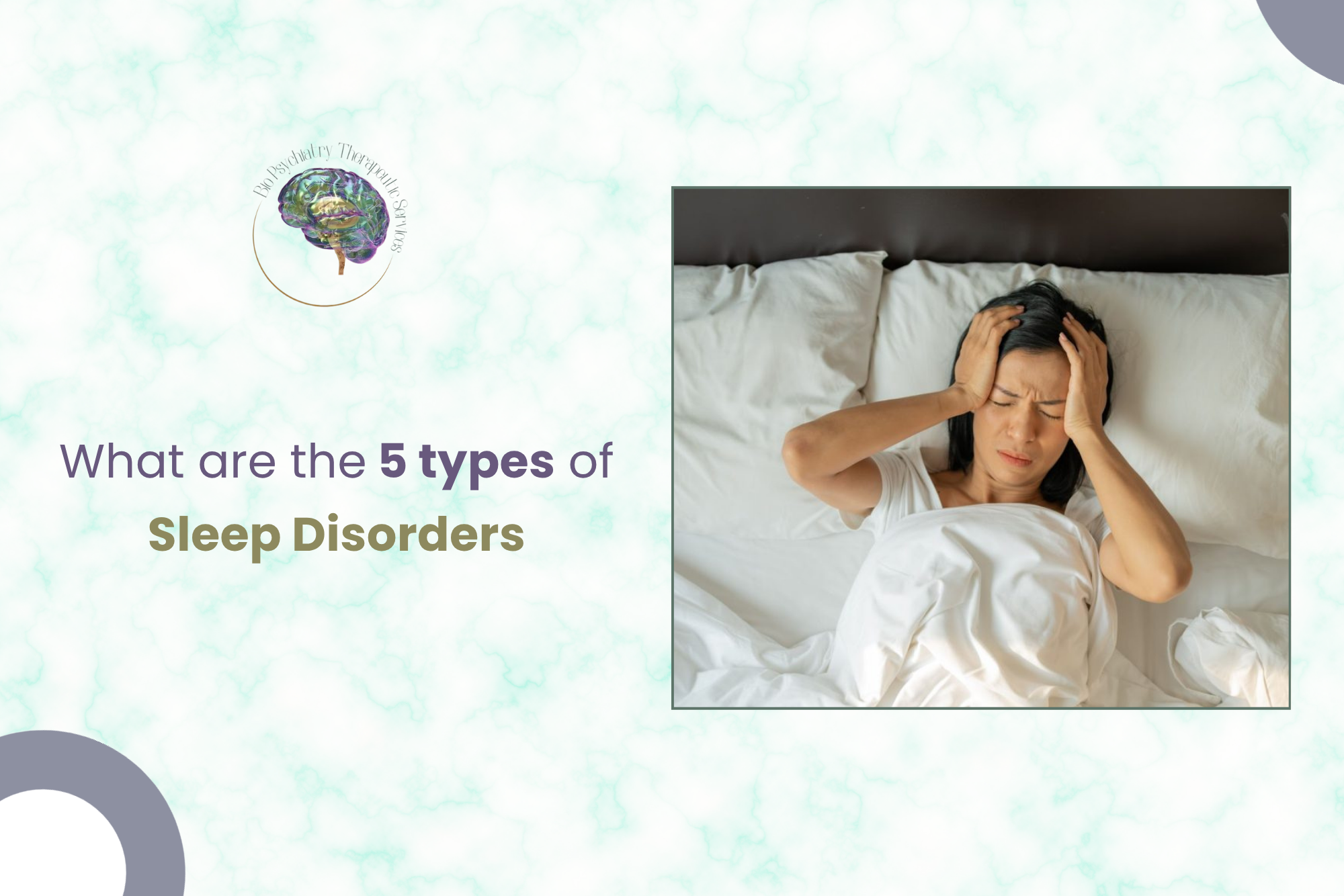
Sleep is very important for your body and mind. You feel happy, strong and full of energy when you sleep well. You can think clearly and work well at school or at work.
However, many people struggle with sleep problems. These problems are referred to as sleep disorders.
Sleep disorders affect people of all ages, making it hard to fall asleep, stay asleep, or feel rested. Some conditions are common, while others are rare sleep disorders. These rare ones may need specialized care and diagnosis.
At Bio Psychiatry Therapeutic Services, LLC, we understand how sleep problems impact daily life. Through our holistic and client-centered telepsychiatry care, we help individuals improve sleep, mental health and emotional balance in a safe and supportive way.
Below are the five main types of sleep disorders.
5 Types of Sleep Disorders
1. Insomnia: Trouble Falling or Staying Asleep
The most frequent sleep disorder is insomnia. It occurs when a person is unable to fall or remain asleep.
Individuals having insomnia might:
- Lie awake for hours at night
- Wake up many times during sleep
- Wake up too early in the morning
- Feel tired even after sleeping
In some cases, insomnia may feel like a borderline sleep condition, as the sleep is not restorative; it is broken or light.
Insomnia can be short-term or long-term. It is caused by stress, anxiety or health conditions.
Doctors may suggest a sleep disorder test to understand the problem better.
At Bio Psychiatry Therapeutic Services, LLC, we help people find the cause of sleep problems and make a care plan for sleep pattern disturbance.
2. Sleep Apnea: Interrupted Breathing During Sleep
When talking about what sleep apnea means, it is a serious condition. It causes breathing to stop and start repeatedly during sleep
Signs may include:
- Loud snoring
- Gasping for air during sleep
- Morning headaches
- Feeling very tired during the day
Sleep apnea is usually diagnosed with a sleep disorder test called polysomnography. This test checks breathing, oxygen levels and brain activity while you sleep.
We help patients get the right treatment at Bio Psychiatry Therapeutic Services, LLC, when symptoms impact daily life.
3. Restless Legs Syndrome: Uncomfortable Feeling in the Legs
Restless Legs Syndrome (RLS) causes a strong urge to move the legs. This often happens at night and feels uncomfortable.
People with RLS may feel:
- Tingling in the legs
- Itching or crawling feelings
- Strong need to move legs to feel better
These feelings often get worse when sitting or lying down. Moving the legs gives short relief, but the discomfort returns when resting again.
RVS may result in difficulties with sleeping or maintaining sleep. It might cause fatigue throughout the day and a change of mood.
At Bio Psychiatry Therapeutic Services, LLC, we address both mental and physical components of a condition. Our care model helps clients overcome symptoms and improve their sleep.
4. Narcolepsy: Sudden Sleep Attacks During the Day
When talking about what narcolepsy is, it is a neurological sleep disorder that causes extreme daytime sleepiness.
People with narcolepsy may experience:
- Sudden sleep attacks
- Ongoing daytime fatigue
- Muscle weakness triggered by emotions
- Sleep paralysis
This condition occurs when the brain cannot properly regulate sleep-wake cycles.
Narcolepsy is less common than other sleep disorders. It’s often seen as a rare sleep disorder because it is complex and needs a specialized diagnosis.
At Bio Psychiatry Therapeutic Services, LLC, our telepsychiatry services focus on building structured routines, improving alertness and helping patients regain control of their daily lives.
5. Parasomnias: Unusual Behaviors During Sleep
Parasomnias involve unusual behaviors that occur during sleep, often without memory of the event.
Examples include:
- Sleepwalking
- Night terrors
- Sleep talking
- Acting out dreams
These can be caused by stress, lack of sleep, or mental health diseases. Some of them are non-hazardous whereas others may be dangerous.
Certain severe or uncommon parasomnias are considered rare sleep disorders and they may need close clinical examination.
At Bio Psychiatry Therapeutic Services, LLC, we help individuals and families understand triggers and create safer sleep environments through supportive telepsychiatry care.
How Sleep Disorders Affect Daily Life
Sleep problems can make your day hard.
You may feel:
- Low energy
- Difficulty concentrating
- Mood swings
- Irritability
- Weakened immune system
In some cases, rare sleep disorders can make these problems worse if not treated.
Building Better Sleep Habits
Good sleep does not happen by accident. It comes from healthy habits and support. Some of these helpful steps are:
- Going to bed at the same time each night
- Avoiding screens before sleep
- Keeping the room dark and quiet
- Reducing stress during the day
- Talking to a mental health professional when needed
A proper care plan for sleep pattern disturbance can make long-term improvements in sleep quality.
At Bio Psychiatry Therapeutic Services, LLC, we guide client’s step by step so they can build strong and lasting sleep habits.
Conclusion
Every aspect of life can be impacted by sleep disorders, though assistance is available. Knowing the 5 types of sleep disorders will help to increase health and a sense of peace, the first step.
If you are searching for the best sleep specialists near me, Bio Psychiatry Therapeutic Services, LLC is here to support you. Our telepsychiatry services are designed to help you find a balance, sleep better and be in a better mood.
Contact us today and we can assist you.
FAQs
What is a sleep disorder test used for?
A sleep disorder test identifies sleep problems and helping doctors create a care plan.
What are sleep study types?
Common sleep studies include:
- Overnight polysomnography (lab-based test)
- Home sleep apnea testing
- Multiple Sleep Latency Test (MSLT)
Each test evaluates different sleep-related conditions.