
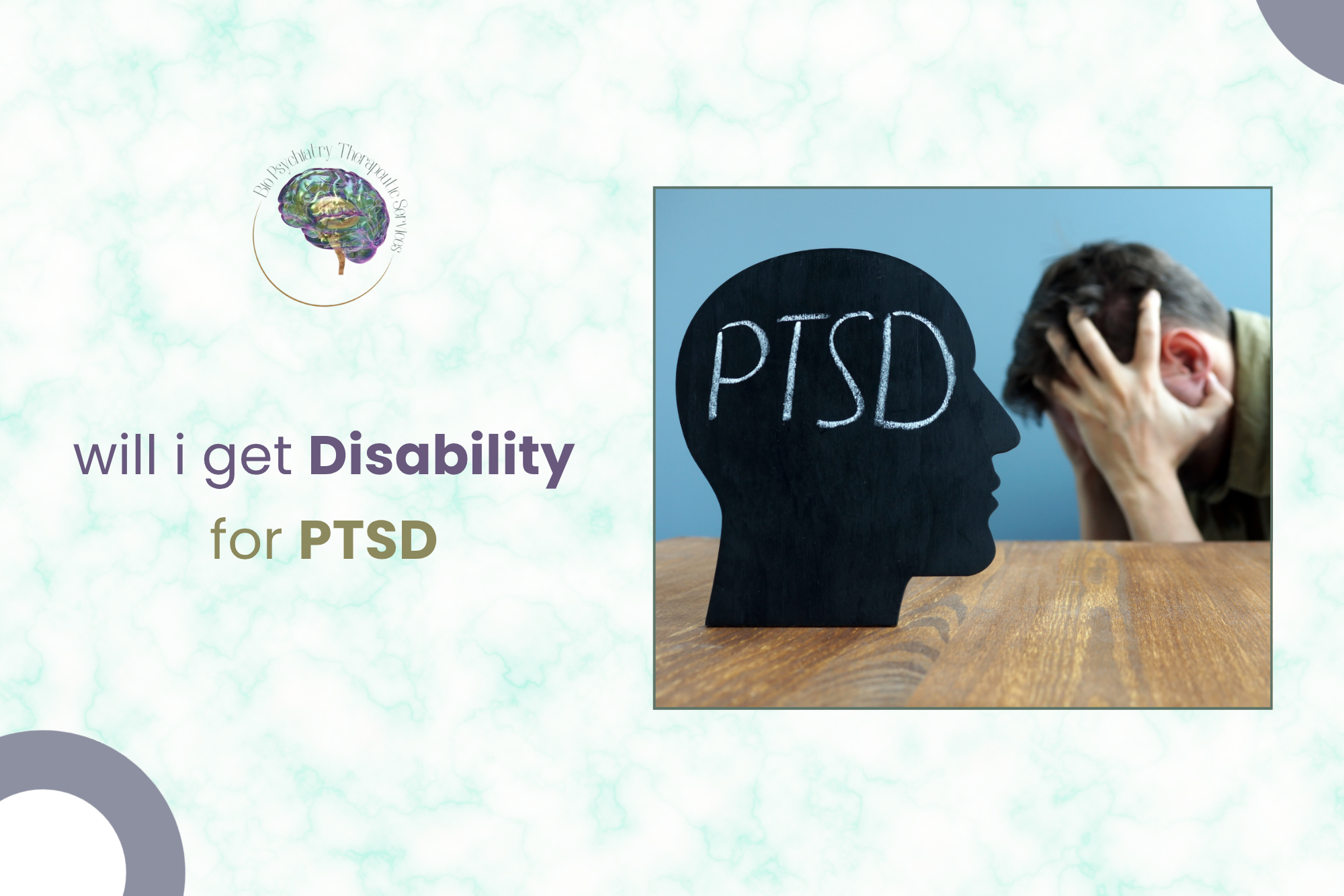
PTSD makes life hard. It causes scary, tired, or upset feelings that last after a bad event. This affects work, school, sleep and daily life.
Many people ask a very important question. “Will I get disability for PTSD?”
The simple answer is yes, some people can get disability for PTSD. But it depends on how serious their symptoms are and how much PTSD affects their daily life.
At Bio Psychiatry Therapeutic Services, LLC, we support people with PTSD through caring telepsychiatry. We offer treatment and guidance to improve emotional and mental well-being.
Below, we will explain everything in a very simple way, so it is easy to understand.
What Is PTSD?
PTSD stands for Post-Traumatic Stress Disorder.
It is a mental health condition caused by a scary or painful event. This can include:
- A serious accident
- Violence or abuse
- War or combat
- A natural disaster
- Any event that makes a person feel deep fear or shock
After the event, the brain feels danger even after it’s gone.
A person with PTSD may:
- Have bad memories again and again
- Have nightmares
- Feel nervous or jumpy
- Avoid places or people
- Feel angry or sad often
- Have trouble sleeping
These feelings can last for months or even years.
Is PTSD Considered a Disability?
Yes, PTSD can qualify for disability benefits.
In many countries, including the United States, PTSD is considered a mental health condition that can stop a person from working normally.
To qualify, the condition must be serious enough that:
- The person cannot keep a job
- Daily life is very hard
- Symptoms last a long time
- Treatment does not fully help
It is not about having PTSD alone. It is about how much PTSD affects life.
Some people with mild PTSD still work and live normally. Others with severe PTSD may not be able to work at all.
How Disability Benefits Work
Disability benefits are money and support given to people who cannot work because of health problems.
There are usually two main types:
SSDI (Social Security Disability Insurance)
This is for people who worked before and paid taxes.
SSI (Supplemental Security Income)
This is for people with low incomes who need help.
To get either one, doctors and records must show that PTSD is serious and long-term.
Signs PTSD May Be Severe Enough for Disability
Not everyone with PTSD will qualify. But some signs and symptoms of trauma and PTSD show that it may be severe:
Trouble Working
A person may not be able to:
- Focus on tasks
- Follow instructions
- Work with others
- Stay at a job for a long time
Strong Emotional Symptoms
A person may feel:
- Fear most of the time
- Panic attacks
- Very strong anger
- Deep sadness
Sleep Problems
Many people cannot sleep well. They may wake up many times or have nightmares.
Avoiding Life Activities
Some people stop going out, meeting friends, or even leaving home.
Memory And Focus Problems
It can be hard to remember things or think clearly.
When these problems are strong and happen often, disability for Post-Traumatic Stress Disorder may be possible.
How Doctors Check PTSD for Disability
Doctors and experts consider several factors:
- Medical history
- Therapy notes
- Medication use
- How symptoms affect daily life
- How long have symptoms lasted
They may also ask questions like:
- Can you work full-time?
- Can you take care of yourself?
- Do you need help from others?
All this information helps decide if PTSD disability is needed.
Why PTSD Can Be Hard to Prove
PTSD is not like a broken bone. It cannot be seen in an X-ray.
That is why paperwork is very important.
Some people are denied at first because:
- They do not have enough medical records
- They did not get regular treatment
- Their symptoms were not clearly written down
- They did not explain how PTSD affects work
This does not mean the person does not qualify. It means more proof is needed.
Steps To Apply for Disability With PTSD
The process can be broken into simple steps.
Step 1: Visit A Doctor
A mental health doctor must confirm PTSD.
Step 2: Collect Records
This includes:
- Therapy notes
- Hospital visits
- Medication lists
Step 3: Fill Out Application
You explain how PTSD affects your life.
Step 4: Wait for Review
The office will check all documents.
Step 5: Possible Interview or Follow-Up
They may ask more questions.
It is important to be honest and clear in every step.
What Makes a Stronger PTSD Claim?
A stronger claim usually tells a clear story. It shows the diagnosis, the symptoms, the treatment and the way life has changed. It also shows that the problem is not mild.
The best claims often have steady care over time and clear notes about how PTSD affects work and daily living.
You may have a stronger case if:
- Symptoms happen often
- Sleep is poor most nights
- You cannot focus long enough to finish work
- You avoid people because of fear or panic
- You have strong reactions to small triggers
- You need help managing daily life
Even then, every case is different. Some people win claims with the right records. Some do not on the first try and need to appeal. A denial does not always mean the case has no value. It may mean more proof is needed.
How To Improve Your Chances
There are simple ways to improve approval chances:
- Visit a mental health provider regularly
- Take medications as prescribed
- Keep a daily record of symptoms
- Explain how PTSD affects work and home life
- Ask doctors to write clear reports
Clear information makes a big difference.
How Long Does It Take to Get Approved for PTSD Disability?
The timeline varies. Some applications take several months, while appeals may further extend the process, depending on the circumstances.
Why Mental Health Care Matters So Much
Good treatment is important for your health and it can also support your claim.
A therapist or psychiatrist can track symptoms over time and help show what you are going through. They can also help you find ways to cope with fear, stress, sleep loss and mood changes.
Social Security uses medical evidence to determine the level of impairment, so regular care can be very helpful.
This is where kind, steady care matters. At Bio Psychiatry Therapeutic Services, LLC, we offer caring online mental health support for children, adults and older people.
We work with people to help them feel stronger and manage life better. Support like this can make a big difference when PTSD makes daily life hard.
Final Thoughts
So, will you get disability for PTSD or qualify for a PTSD disability living allowance? You might, if your symptoms are serious enough to stop you from working and you have strong medical proof.
The most important things are a real diagnosis, regular treatment and clear records that show how PTSD affects your life.
Social Security looks at your condition, your work history and whether you can do other work. Veterans may also have VA options if the condition is service-connected.
If PTSD is making life hard, Bio Psychiatry Therapeutic Services, LLC can help through online care.
You can reach out to get help and start feeling better.
FAQs
Can I work and still get disability for PTSD?
Sometimes, but only if work is very limited. Full-time work usually makes it harder to qualify.
Do I need therapy to qualify?
Therapy is very helpful. It also helps doctors better understand your condition.
How long do PTSD episodes last?
PTSD symptoms vary from person to person. Flashbacks may last minutes, while anxiety, emotional distress and other symptoms can continue for hours or days.
Will medication help my claim?
Yes. Medication records show that you are getting treatment.