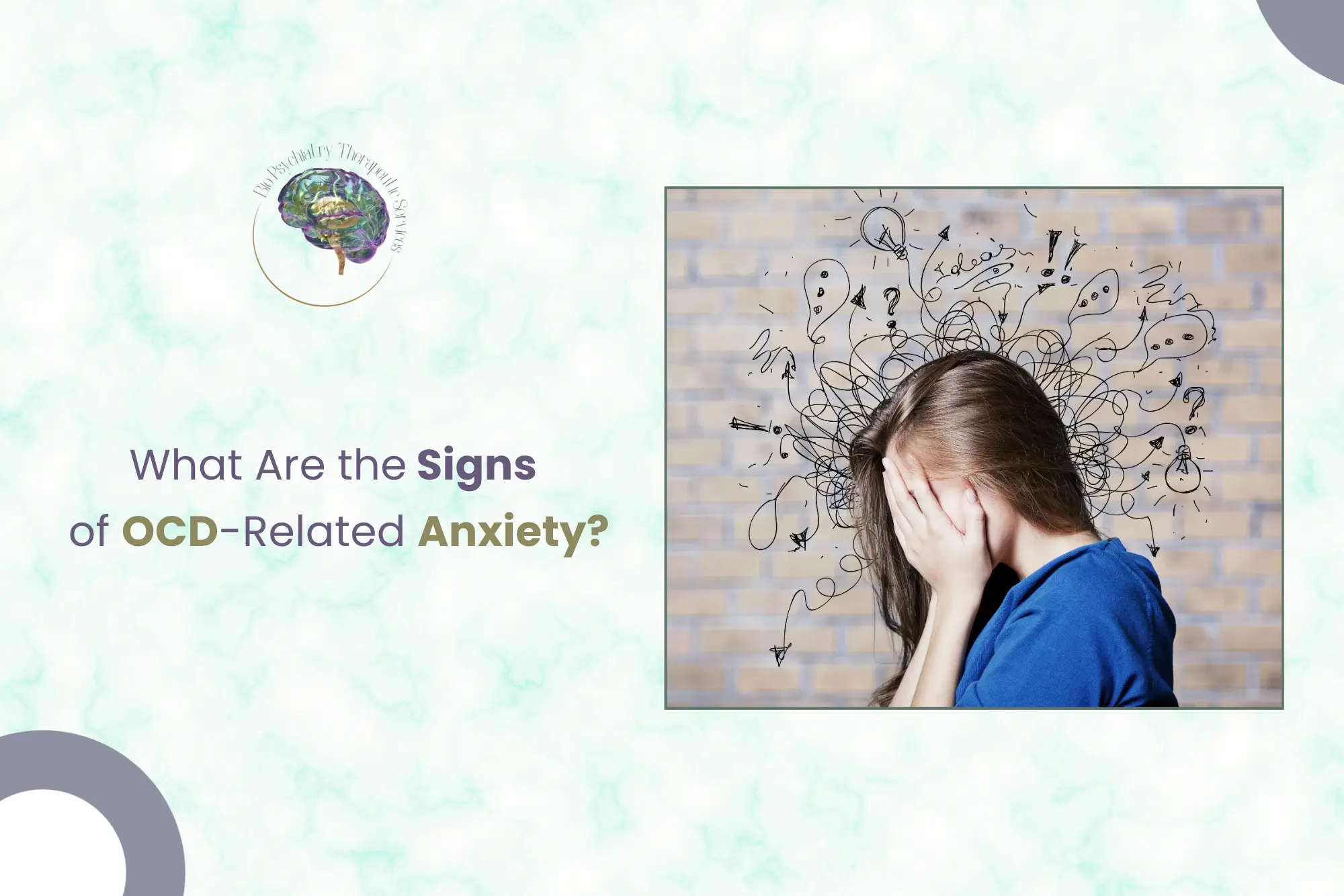
Have you ever worried about something again and again in your mind?
Everyone worries sometimes. You might worry about a test, homework, or friends. This is normal.
But sometimes worry becomes very strong. It can feel hard to stop. This is called anxiety. Some people have anxiety linked with a condition called OCD.
Below, we will help you understand the signs of OCD-related anxiety thoroughly. You will also learn how it can affect daily life and what kind of support can help.
Understanding OCD-Related Anxiety
OCD stands for Obsessive-Compulsive Disorder. It is a mental health condition that makes a person have thoughts they do not want. These thoughts come again and again and are called obsessions.
OCD-related anxiety is a strong feeling of fear resulting from these obsessions. It can feel overwhelming and difficult to manage. People don’t know why such thoughts recur. This can lead to increased stress in your life.
At Bio Psychiatry Therapeutic Services, LLC, we provide caring, evidence-based support to help people find peace and stability through telepsychiatry, therapy and medication management.
Signs of OCD-Related Anxiety
OCD-related anxiety can appear in different ways. Below are some of the most common signs.
Constant and Unwanted Thoughts
A key indicator of OCD-related anxiety is the presence of recurring unwanted thoughts.
These thoughts can seem:
- Odd or unsettling
- Difficult to dismiss
- In conflict with personal beliefs
- Intensely real and pressing
People might see that these thoughts are illogical but still feel anxious. This creates a cycle of worry. The more they try to ignore the thoughts, the stronger they can get.
These thoughts typically revolve around:
- Anxiety about germs or contamination
- Worry about harm befalling oneself or others
- Concern about making errors
- Fear of losing control
This ongoing mental strain can hinder relaxation and concentration.
Strong Need to Perform Repetitive Actions
A typical sign is the urge to perform actions over and over. This action reduces anxiety caused by obsessive thoughts.
Examples include:
- Washing hands many times
- Checking locks, doors, or appliances repeatedly
- Counting objects or steps
- Arranging things in a very specific order
These actions offer temporary relief. However, anxiety often returns, creating a cycle.
Fear of Harm or Something Bad Happening
People with OCD-related anxiety often fear something bad will happen.
This fear may not be based on real danger. Still, it feels very real in the mind. It can lead to constant worry, such as:
- “Did I lock the door?”
- “Did I hurt someone without knowing?”
- “What if something bad happens because of me?”
This type of thinking creates ongoing stress. It can also cause frequent attempts to look around or encourage others to look after them.
Excessive Doubt and Difficulty Trusting Decisions
A key sign of OCD-related anxiety is constant doubt.
Even simple decisions can feel very difficult. A person may question themselves again and again.
For example:
- Choosing clothes may take a long time
- Simple tasks may feel uncertain
- Decisions may be changed multiple times
This doubt is not just normal hesitation. It is strong and persistent. It causes stress and disruption.
People usually want to be 100 percent sure before acting, but that’s rarely possible
Mental Rituals and Silent Compulsions
Not all compulsions are visible. Some happen in the mind. These are called mental rituals.
Examples include:
- Repeating words or phrases in the mind
- Mentally reviewing past actions
- Praying or counting in a specific way
- Trying to cancel out “bad thoughts” with “good thoughts”
These mental habits are used to reduce anxiety. However, they often make the cycle stronger over time.
Mental rituals can be exhausting because they are constant and hard to stop.
Avoidance of Triggers
People with OCD-related anxiety might start to avoid some situations. This is to avoid stress or fear.
Avoidance may include:
- Not touching certain objects
- Avoiding public places
- Staying away from situations that trigger thoughts
- Avoiding conversations about specific topics
Avoiding things can make fear stronger over time.
Feeling Responsible for Preventing Harm
A heavy burden of responsibility is another red flag of OCD-related anxiety.
A person may try to prevent harm even if the risk is small or not real.
This can lead to thoughts like:
- “If I do not check, something bad will happen”
- “It will be my fault if anything goes wrong”
- “I must make sure everything is perfectly safe”
This responsibility can be overwhelming.
Emotional Distress and Physical Symptoms
OCD-related anxiety impacts not just peace of mind, but the body as well.
The following are common emotional symptoms:
- Constant worry
- Fear without a clear reason
- Feeling overwhelmed
- Irritability or frustration
Physical symptoms could be:
- Fast heartbeat
- Tiredness
- Trouble sleeping
- Headaches
- Muscle tension
These symptoms tend to flare up in situations of stress or when obsessions intensify.
How OCD-Related Anxiety Affects Daily Life
When OCD anxiety is very strong, it can make daily life difficult.
It can affect:
- Work or academic performance
- Daily routines and productivity
- Relationships and social interaction
- Confidence and self-esteem
The mind’s patterns and routines can consume significant time and energy.
When to Get Professional Assistance?
If intrusive thoughts and behaviors disrupt your life and cause distress, it’s important to get professional help. Only a mental health-qualified specialist can diagnose OCD or other conditions.
Early intervention has a great opportunity to make a significant difference.
How Professional Support Can Help
OCD-related anxiety is treatable. Individuals can learn to accept and manage symptoms and regain control of their lives.
Bio Psychiatry Therapeutic Services, LLC offers caring, evidence-based treatment through secure telepsychiatry technology. We aim to make mental health care easy and relaxed.
We offer:
- Psychiatric evaluations to understand symptoms clearly
- Personalized medication management when needed
- Therapy support to help manage thoughts and behaviors
- A safe and non-judgmental space for healing
We pay attention to the whole person, rather than the symptoms. All care is personalized to meet the needs and aspirations of the individual.
Moving Toward Healing
OCD-related anxiety is a never-ending cycle of thoughts, fear and repeated actions.
But healing is possible.
With care, support and the right tools, the cycle can slowly become weaker. Life can feel lighter. The mind can feel calmer.
Small steps matter. Even learning about OCD is a powerful first step.
Final Thoughts
If you see signs of OCD-related anxiety in yourself or someone close to you, help is available.
At Bio Psychiatry Therapeutic Services, LLC, compassionate care is ready for you. With customized care and effective therapy, you will start to know and understand your mind, reduce your anxiety and live a more relaxed life.
Take the next step towards peace today by reaching out to us for caring mental health care.
FAQs
How do I know if my anxiety is actually OCD?
Anxiety driven by intrusive thoughts, doubt and repetitive behaviors may be OCD. A mental health professional can assess this.
Are intrusive thoughts a sign of OCD?
Intrusive thoughts are common, but in OCD, they are persistent and distressing, leading to compulsive behaviors.