
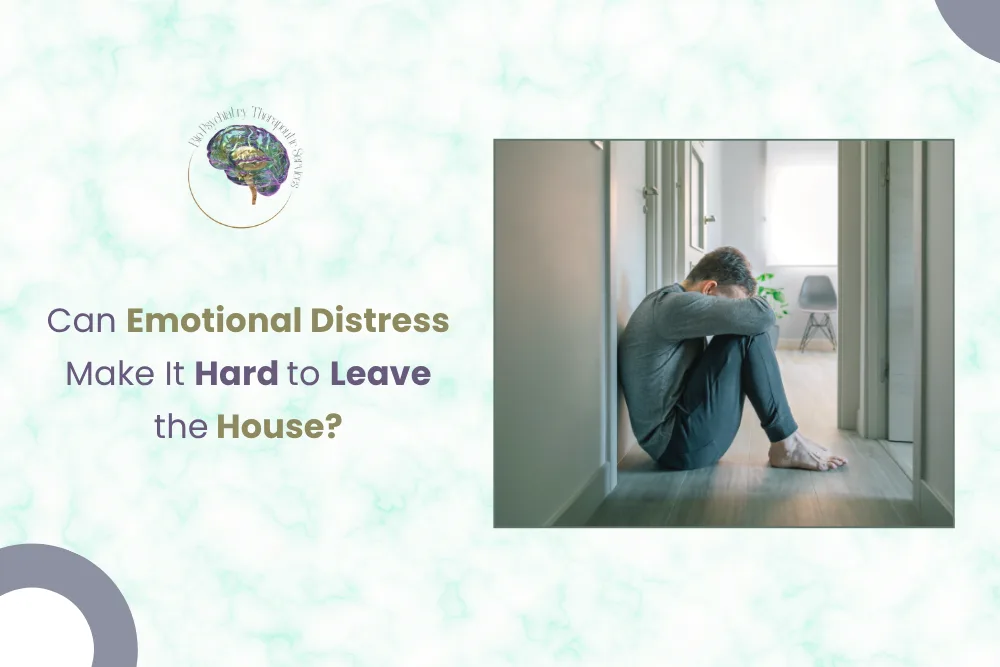
Have you ever felt so worried or sad that you wanted to stay in bed all day?
Maybe your chest feels heavy when you think about going outside. Maybe getting dressed, opening the door, or going to the store feels very hard.
These feelings are not a bad day’s experience for some. This is known as emotional distress, and it is a genuine situation. It is a condition that many people have to deal with.
At Bio Psychiatry Therapeutic Services, LLC, we offer mental health services to improve the understanding of patients’ feelings and enhance the building of healthy daily habits.
So, can emotional distress make it hard to leave the house? Let’s take a closer look.
What Is Emotional Distress?
Emotional distress refers to intense feelings that cause inner pain. These feelings may involve:
- Fear
- Panic
- Worry
- Sadness
- Hopelessness
Overwhelming emotions can interfere with daily activities, making tasks like shopping or walking to the mailbox seem difficult.
Emotional distress can’t be easily dismissed. It shows a struggle, not weakness.
Can Emotional Distress Make It Hard to Leave the House?
Yes, emotional distress can make it hard to leave the house. When worry, fear, sadness, or stress become intense, even simple tasks can feel too difficult. Tasks like:
- Getting dressed
- Opening the door
- Driving to work
- Going to the store
These may suddenly feel overwhelming.
For some people, home may feel like the only safe place.
Outside, there may be too many people, sounds, or things to deal with. A person may worry about what could happen.
Over time, staying home more and more can make life feel smaller.
Why Can Emotional Distress Make Leaving Home Difficult?
Leaving home means facing situations that may feel uncertain. When stress is detected, the body may go into high alert. The heart may beat faster. Breathing may change. Muscles may become tense. Thoughts may race.
These reactions can make leaving home feel unsafe.
A person may think:
- “What if something goes wrong?”
- “What if I panic outside?”
- “What if people notice that I am nervous?”
- “What if I cannot get home?”
- “I do not have the energy to deal with anyone today.”
These thoughts can lead to avoidance.
Avoidance can feel helpful in the short term. Fearing might be less for a few hours when staying home. However, repeated avoidance training can make the person feel unsafe when trying to go outside, even if they are not. This can create a cycle of fear and avoidance.
Anxiety and Fear of Leaving the House
Anxiety is one reason a person may have trouble leaving home.
Anxiety can cause many symptoms, such as:
- Fast heartbeat
- Sweating
- Shaking
- Dizziness
- Upset stomach
- Chest discomfort
- Racing thoughts
- Fear of losing control
For some people, these feelings become worse in places where they feel they cannot leave easily.
This may include:
- Crowded stores
- Buses or trains
- Workplaces
- Schools
- Social events
- Large public places
- New or unfamiliar places
Anxiety can feel real, even without danger. The person may feel that something bad will happen.
At Bio Psychiatry Therapeutic Services, LLC, we help people identify their feelings. Then, we teach them positive ways to cope.
Depression Can Also Make It Hard to Go Outside
Not everyone hesitant to leave home feels fear; depression can also hinder this. It reduces energy and motivation, making once-easy tasks feel difficult.
You may not have the energy to:
- Take a shower
- Get dressed
- Cook food
- Answer messages
- Go to work
- Meet friends
- Leave the house
You might feel sad, empty, or disconnected and lose interest in activities you once enjoyed.
This can create a cycle:
Low mood can lead to staying home. Staying home can lead to loneliness. Loneliness can make low mood worse.
Getting support can help break this cycle.
Scary Memories and Big Feelings
Scary memories can change how a person responds to the world. After something scary happens, certain places, sounds, people, or things might trigger fear or distress.
Someone with scary memories might feel safer at home because home feels safe. Going outside can bring reminders of past scary things. It might also create fear that something bad could happen again.
At Bio Psychiatry Therapeutic Services, LLC, we take these feelings seriously.
Our care can focus on safety, trust, respect and each person’s needs.
When Staying Home Becomes a Problem
Occasional staying home is normal for rest. However, it becomes a concern if it disrupts important life aspects.
It may be time to seek professional support if emotional distress makes it difficult to:
- Go to work or school
- Attend appointments
- Buy food or complete errands
- Spend time with loved ones
- Maintain important relationships
- Care for personal needs
- Participate in enjoyable activities
- Handle normal responsibilities
The goal is not to force someone into situations before they are ready. The goal is to understand the cause of the distress and develop safe, practical ways to manage it.
How Professional Support Can Help
Professional support can uncover the reasons behind difficulty leaving home.
At Bio Psychiatry Therapeutic Services, LLC, we offer holistic, client-centered mental health care via telepsychiatry for all ages. Our treatment may involve therapy, a psychiatric evaluation, coping skills, education and medication management as needed.
Each approach is tailored to individual needs.
Treatment may focus on:
- Recognizing anxious thoughts
- Understanding emotional triggers
- Managing stress
- Practicing calming skills
- Building healthy routines
- Improving confidence
- Handling difficult situations
- Reducing unhealthy avoidance
- Strengthening relationships
Medication isn’t for everyone. If considered, we discuss benefits, side effects and individual needs. Telepsychiatry enhances accessibility for those who struggle to leave home. Our website offers details on insurance and self-pay options.
Small Steps Can Help
When leaving home feels very hard, you do not have to do everything at once.
Small steps may feel easier.
For example, you might:
- Sit outside for a few minutes
- Walk to the mailbox
- Take a short walk
- Sit on your porch
- Visit a place you know well
- Go outside with someone you trust
The right step is different for each person.
No one plan works for everyone. A mental health professional can help you make a plan based on your feelings, needs and goals.
When Should You Seek Professional Help?
If emotional distress is making it hard to leave the house, do your daily tasks, or connect with others, getting help can be a good idea. Getting help early can keep things from getting worse.
It is very important to get help right away if you have thoughts of hurting yourself or feeling like you cannot stay safe.
Take the First Step Toward Support
Emotional distress can make the outside world feel frightening, exhausting, or impossible to face. Anxiety, depression, trauma and overwhelming stress can all affect a person’s ability to leave home and maintain daily activities.
We provide individual mental health care in a caring way at Bio Psychiatry Therapeutic Services, LLC. We offer therapy, psychiatric services and telepsychiatry to support emotional issues and enhance daily functioning.
If you or a loved one is struggling, contact Bio Psychiatry Therapeutic Services, LLC today. Visit our website to schedule an appointment. You are not alone; there is hope.
FAQs
Can fear keep me indoors?
Yes, intense worry and panic can make the outside seem dangerous, causing you to stay inside. Many people experience this.
Is staying home a mental health issue?
It can be. If fear keeps you home for days, you might have agoraphobia. Depression and anxiety can also play a role, varying by individual.