
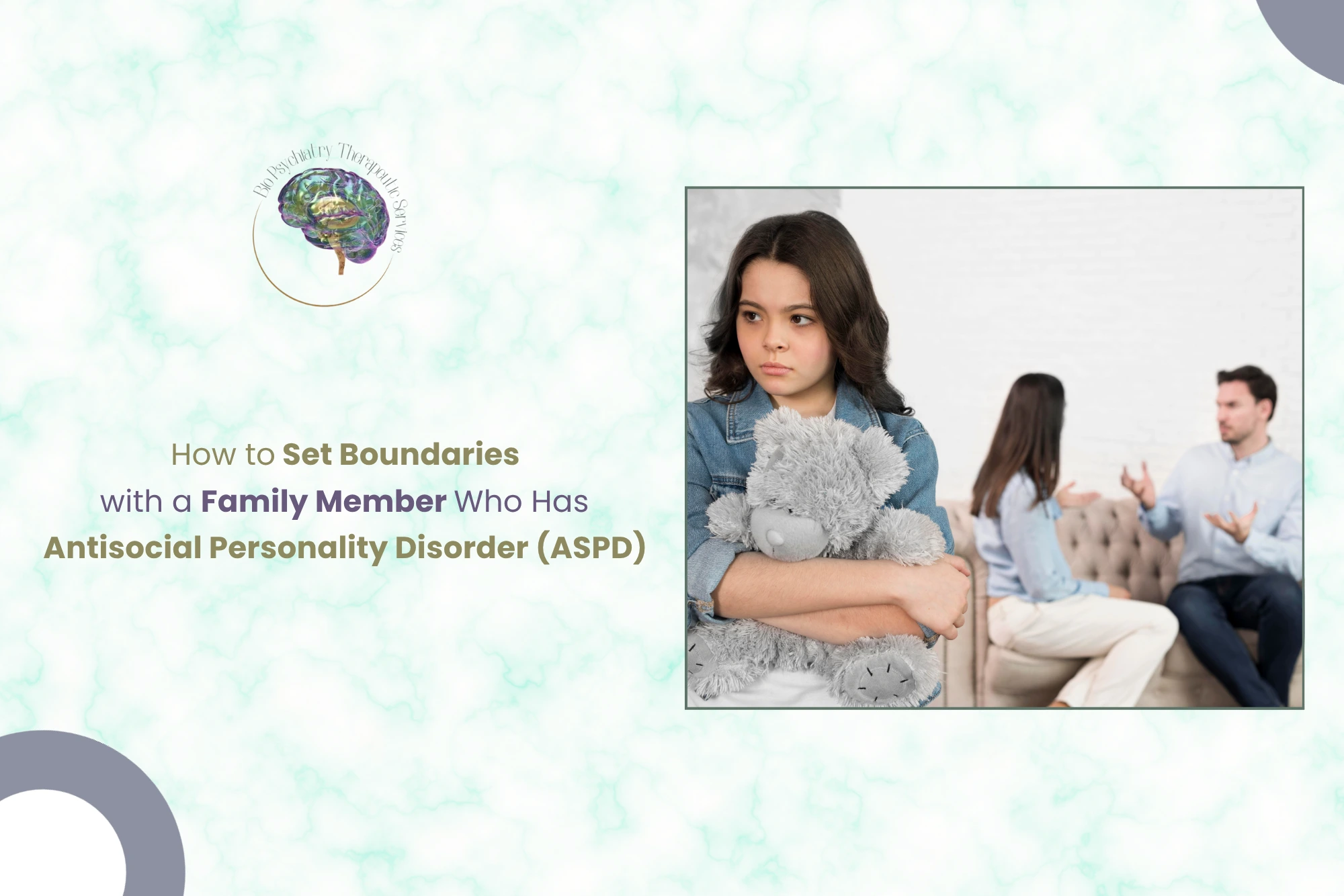
Living with family can be wonderful. But sometimes, loving a family member is very hard. This is true when that person has antisocial personality disorder, or ASPD.
People with ASPD often act without thinking about right and wrong. They may tell lies, break rules, or hurt feelings without feeling sorry. If someone in your family has ASPD, you might feel stressed, hurt, or drained.
You cannot change how they act. But you can protect your own heart and mind. Learning to set clear boundaries is the best way to stay safe and calm.
Below, we will help you understand ASPD and give you simple steps to set boundaries that work.
What Is Antisocial Personality Disorder (ASPD)?
ASPD is a real mental health condition. It is not just someone having a bad day.
Here are some signs of ASPD:
- They do not say sorry when they hurt you
- They get mad very fast
- They yell or hit things
- They tell lies to get what they want
- They do things without thinking about what will happen next
- They forget to pay bills or take care of their job
ASPD is not the same as being shy. It is a pattern of bad behavior. It makes relationships very hard. People with ASPD often think they are fine. They think other people are the problem.
If you have a family member with ASPD, you cannot fix them with love alone. You need clear rules to keep your peace.
Why Are Boundaries Important?
Without boundaries, you may sense that others dictate your life. You may worry about upsetting them. You might lend them money even if it’s beyond your means. may agree to things when you genuinely wish to decline.
This often leads to significant stress.
Sound boundaries safeguard your emotional well-being. They enable you to understand that you aren’t responsible for another person’s thoughts, emotions, or behaviors.
You are responsible for your own decisions.
This is a crucial point to keep in mind.
Simple Steps to Set Boundaries
Setting boundaries takes practice. You will get better over time. Here are some steps you can try.
Step 1: Know What You Will and Will Not Accept
Before you set a boundary, you need to know what it is. Think about what hurts you the most.
Maybe you will not let anyone yell at you. Maybe you will not let anyone take your money. Maybe you will not let anyone lie to you.
Write your rules down. Use short words. For example, “No yelling.” “No taking my money.” “No lies.” This helps you be clear.
Step 2: Speak Clearly and Keep It Short
Avoid long speeches or arguments. Those with ASPD may twist your words.
Keep it brief and clear:
- I will not give you money.
- If you yell, I will leave.
- You cannot stay at my house tonight.
Use a calm, steady voice. State rules as simple facts, without anger or fear.
Step 3: Plan the Consequence and Follow Through
This is very important. If you set a rule but do not follow it, your family member will learn that they can ignore you.If you say you will leave when they yell, you have to leave every single time. This shows them you mean what you say.
It can be hard to follow through. You might feel bad. You might hope they will change. But sticking to your rules is how you stay safe.
Step 4: Keep Your Words Short
Do not give long speeches. Long speeches give your family member a chance to argue. They might twist your words. They might make you feel confused.
Keep it to one or two sentences. Say what you need to say. Then stop.
For example, “I will not lend you money. Please do not ask again.” That is enough. You do not need to explain why.
Step 5: Plan for Pushback
Your family member might not like your new rules. You should expect some pushback. Here are some possible reactions:
They might:
- Get very mad
- Call you names
- Try to make you feel guilty
- Try to talk you out of it
This is normal. People with ASPD do not like rules. They see rules as things to break.
Stay calm. Do not yell back. Repeat your rule if you need to. Then walk away if the fight gets too big.
Dealing with Manipulation
Manipulation is common in people with antisocial personality disorder (ASPD). They use tactics like:
- Charm
- Deceit
- Guilt
To manage this behavior, first recognize the signs:
- They may play the victim
- They often use guilt
- They promise change but lack real intent
Trust your instincts. If something seems off, it likely is. You don’t require evidence to establish boundaries.
Keep your reasons concise. Manipulators can easily distort your statements.
If you’re feeling stressed or uncertain, step back. Inform them you need time to reflect. This will help you make clearer decisions.
Take Care of Yourself
Setting rules is hard work. It takes a lot of your energy. You must take care of yourself while you do this.
Talk to someone. Call a friend. Join a group of people who understand. Or see a therapist.
Practice self-compassion. Be kind to yourself. You are doing something difficult. It is okay to have hard days.
Rest when you are tired. Setting rules can wear you out. Take a nap. Read a book. Watch a funny show. Give your body and mind a break.
Know your worth. You deserve to be treated well. Your feelings count. Your safety comes first.
When to Get Professional Help
Sometimes, you need more help than you can provide. That’s okay. Asking for help is brave.
A mental health provider can teach you important skills, such as:
- Setting rules
- Staying safe from anger and aggression
- Handling the stress of loving someone with ASPD
If you are struggling with a family member who has ASPD, Bio Psychiatry Therapeutic Services, LLC can help you find your way. Through convenient telepsychiatry, we provide:
- Tools to set boundaries
- Support to take care of yourself
We offer holistic, compassionate mental health care for adults, children and seniors.
We offer individual therapy, family guidance and psychiatric care to help you achieve balance and peace.
Contact us today to begin your journey toward optimal health and emotional strength.
What If Boundaries Are Not Enough?
Sometimes, even with boundaries, a family member’s behavior won’t change. You may need to limit the time you spend with them. In some cases, you may decide to stop contact.
This is a tough decision. Feeling sad is fine; your mental health and safety come first.
Some families choose to have contact only in public places. Others choose to talk only on the phone. Some choose to step back completely.
There is no one right answer. What matters is what works for you.
A Final Word
Living with a family member who has ASPD is not easy. You did not request this. You are doing your best.
Set boundaries to protect yourself. It’s not about hurting family. Take care of yourself.
One can love and have rules. You can reject someone you love. Things can be true simultaneously.
Be kind to yourself. This takes time. Every self-defense step is a win. Celebrate minor wins.
You deserve calm. You deserve security. You deserve respect. Keep it in mind.
FAQs
Is it okay to go no-contact with a family member who has ASPD?
Yes. If they keep hurting you, you have the right to stop seeing them.
How do I stop feeling guilty for setting hard rules?
Remember that rules are about taking care of yourself. You are not being mean. You are being safe. Talking to a therapist can help with guilty feelings.