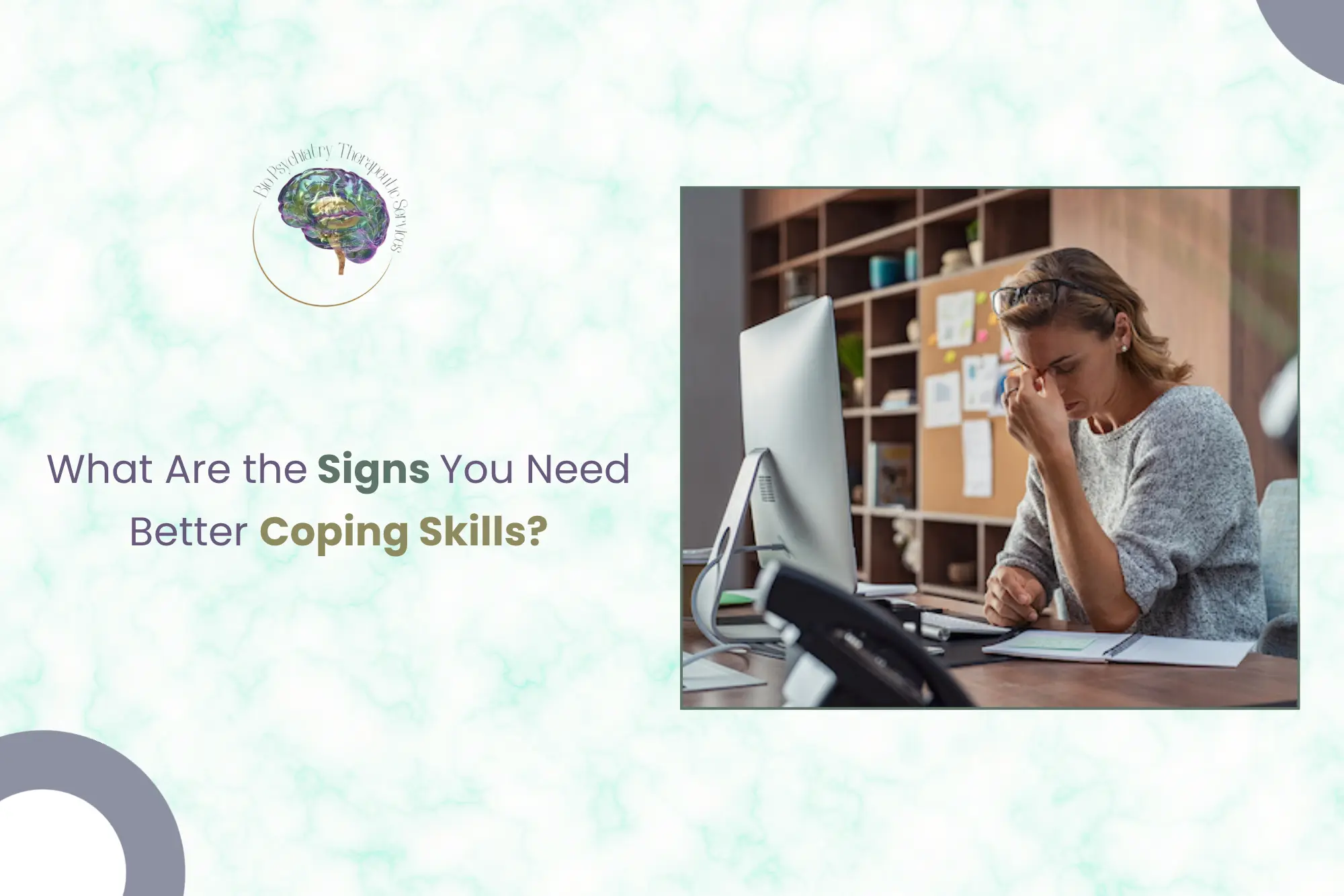
Do everyday problems feel harder to manage? If stress or frustration from manageable situations is rising, you may need better coping skills.
Everyone faces challenges from work, school, relationships, or life changes. Healthy coping skills manage emotions and stress. However, these methods can become ineffective over time.
At Bio Psychiatry Therapeutic Services, LLC, we provide secure telepsychiatry and life coaching. Our goal is to help you understand your challenges.
If you are wondering whether you need better coping skills, the following signs may help you better understand what you are experiencing.
What Are Coping Skills?
Coping skills help manage stress and emotions, guiding better decision-making. Healthy examples include:
- Taking deep breaths
- Exercising
- Talking to someone you trust
- Practicing mindfulness
- Writing in a journal
- Setting healthy limits
- Asking for professional help
- Making simple daily goals
Using these skills can make hard times easier to handle.
At Bio Psychiatry Therapeutic Services, LLC, we help each person find coping skills that work best for their needs and goals.
Signs You May Need Better Coping Skills
Sign 1: You Feel Overwhelmed Most Days
Daily stress could indicate a need to improve your coping skills. You may notice:
- Constant worry
- Difficulty concentrating
- Feeling emotionally exhausted
- Trouble making simple decisions
- Feeling like life is always out of control
Build coping skills to regain emotional balance instead of pushing feelings away.
At Bio Psychiatry Therapeutic Services, LLC, we help clients find their stress sources. Then, we create coping plans that match their lifestyles.
Sign 2: Small Problems Feel Much Bigger Than They Are
Minor inconveniences shouldn’t keep you feeling exhausted for several hours or days.
Examples include:
- Becoming extremely upset over small mistakes
- Feeling defeated after minor setbacks
- Losing hope quickly
- Feeling unable to recover from everyday disappointments
Strong coping skills improve emotional flexibility. They help you pause, evaluate situations clearly and respond calmly.
Sign 3: You Avoid Problems Instead of Solving Them
Avoidance often provides temporary relief but creates larger problems over time.
You may notice yourself:
- Ignoring important conversations
- Putting off responsibilities
- Avoiding bills or finances
- Skipping appointments
- Isolating yourself from others
At Bio Psychiatry Therapeutic Services, LLC, we help clients gain confidence. We also help them face challenges and make clear steps to move ahead.
Sign 4: Your Relationships Are Getting Harder
Stress can affect your relationships with family and friends.
You may notice:
- More arguments
- Pulling away from others
- Trouble sharing feelings
- Getting angry easily
- Finding it hard to trust people
Healthy communication can help build stronger relationships.
Life coaching and mental health support can teach you ways to stay calm and talk through problems.
Sign 5: You Constantly Feel Anxious
Occasional anxiety is normal. Constant anxiety is not.
Signs may include:
- Racing thoughts
- Restlessness
- Trouble sleeping
- Muscle tension
- Constant fear of worst-case scenarios
Healthy coping skills can help your mind and body relax.
At Bio Psychiatry Therapeutic Services, LLC, we use telepsychiatry to help people understand anxiety. We identify triggers and create personalized coping techniques. This approach reduces daily stress.
Sign 6: Your Mood Changes Quickly
Frequent emotional ups and downs may indicate difficulty managing stress. You may experience:
- Anger that appears suddenly
- Crying often
- Feeling emotionally numb
- Extreme frustration
- Difficulty calming down
Better coping skills help you handle emotions. They lead to thoughtful responses instead of quick reactions.
You can make normal situations more manageable if you’ve learned these skills.
Sign 7: You Have Trouble Sleeping
Stress can disrupt sleep. Warning signs include:
- Trouble falling asleep
- Frequent awakenings
- Oversleeping
- Tiredness after sleep
- Racing thoughts at night
Relaxation, mindfulness and healthy routines can help improve sleep.
Sign 8: Physical Symptoms Keep Appearing
Mental health and physical health are closely connected.
Chronic stress may contribute to:
Healthy coping skills can improve both your emotional and physical health.
Sign 9: You Use Unhealthy Habits to Feel Better
Some habits may help for a short time but cause bigger problems later.
You may:
- Eat when you are upset
- Shop too much
- Work too much
- Spend too much time online
- Use alcohol or drugs
Healthy habits are a better way to feel better.
At Bio Psychiatry Therapeutic Services, LLC, we provide support without judgment. We help people build healthier habits.
Sign 10: You Feel Stuck in Life
Sometimes you may feel like you cannot move forward.
You may:
- Feel tired all the time
- Have no goals
- Feel sad or hopeless
- Lose confidence
- Feel scared to make choices
Life coaching can help you make small steps toward your goals.
Developing Coping Skills with Professional Support
Learning better coping skills can improve your mental health.
Professional support gives you a safe place to:
- Talk about problems
- Understand your feelings
- Learn new skills
- Create healthy habits
At Bio Psychiatry Therapeutic Services, LLC, we help people manage stress, understand emotions and handle life’s challenges in healthier ways.
Final Thoughts
Everyone has difficult days. But if you feel stressed, worried, or stuck most of the time, learning better coping skills may help.
At Bio Psychiatry Therapeutic Services, LLC, we offer secure telepsychiatry, life coaching and personal support to help improve emotional health.
Contact us to learn how we can help you build healthier coping skills and improve your quality of life.
FAQs
Can coping skills help with anxiety?
Yes, they can reduce worry and improve stress management.
Are coping skills enough for mental health issues?
They help many people, but some may need professional support.