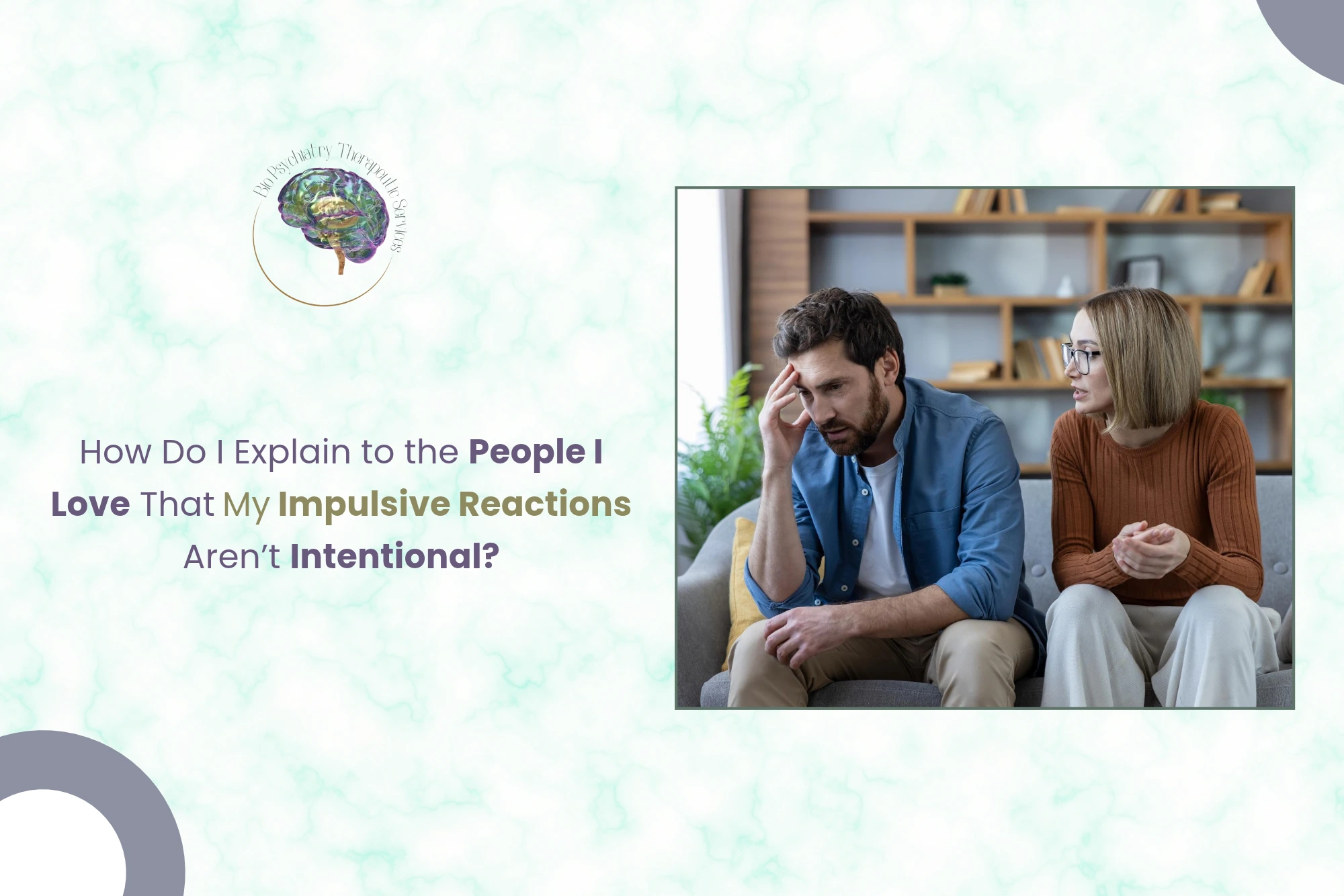
Be honest but keep it short. Say that your quick reactions happen before you can think, not because you want to hurt anyone. Describe your feelings, apologize where appropriate, and outline what you’re doing to address this. Seeking the support of a psychiatrist can also be helpful.
At Bio Psychiatry Therapeutic Services, LLC, we treat patients with concerns that can contribute to impulsive reactions. We offer caring telepsychiatry for children, adults, and seniors.
Why Impulsive Reactions Happen
Reacting impulsively involves taking action before thinking. According to the National Institute of Mental Health, ADHD can involve impulsivity and difficulty with self-control.
Some examples include:
- Saying something hurtful without meaning to
- Interrupting others during a conversation
- Hitting a door (or other object) in frustration
- Walking out of a situation in anger
We all experience this occasionally. However, certain individuals will find themselves reacting this way frequently, almost as though their emotions ignite uncontrollably.
There are multiple possible reasons why an individual may react this way:
- ADHD, which can make it hard to pause and think
- Rapidly escalating emotions
- Stress and lack of sleep
- Past experiences that may have caused emotional trauma
- A range of psychiatric and personality disorders
With the assistance of a qualified clinician, you can identify the root cause. Knowing the cause can make talking to your family much easier.
Why Your Family Gets Upset
Your family judges you based on your actions alone. They don’t see the guilt you feel later. Saying something harsh can feel like a deep personal attack to them.
Over time, they may:
- Walk on eggshells around you
- Pull away to stay safe
- Wonder if you care
While their feelings are valid, it is also important to share your true intentions, so they understand both sides.
How to Explain Your Reactions Step by Step
Pick a calm time. Don’t try to explain yourself in the middle of an argument. Try to select a quiet time when no one is angry.
Use “I” Statements
Discuss your emotions. Avoid using the phrase “you made me.”
Use the following type of lines:
- My body responds before my mind when I become anxious or upset
- I never plan to hurt you. I feel awful after it happens
- I am working on it, and I would like your help
Share Your Triggers
Let them know what triggers your reactions. It could be boredom, exhaustion, or being ignored. When they know your triggers, they can see a pattern instead of a personal attack.
Ask and Listen
Say, “How did my words sound to you?” Then listen. Avoid defending yourself. Listening is a way to convey respect and develop trust before any words are spoken.
Own the Hurt without Making Excuses
I didn’t mean it” is true, but it’s only a portion of what is occurring. There’s a difference between intention and outcome. You can state, “I didn’t intend to cause you harm, and I apologize for causing you harm.”
If you want to apologize properly, it takes three stages:
- Say what you did
- Say you are sorry
- Say what you will try next time
Then keep your word. Trust is built through a series of small promises kept regularly. Trust cannot be established with one grand statement. When you break a promise, apologize as soon as possible and then make another attempt.
Small Habits That Help You Pause
Daily actions are better than words. Try these simple steps to help you pause:
- Take one slow breath before you speak
- Count to five in your head
- Pick a safe word with your family that means “we need a break”
- Walk away for ten minutes, then come back and finish the talk
- Sleep well and eat on time, since a tired body reacts faster
- Write down rough moments to spot patterns
When to Get Extra Help
Love and good plans are sometimes not enough. It may be time to see a professional if:
- Your reactions happen often
- They are damaging your relationships at home, school, or work
- You feel deep guilt or shame after them
- You use alcohol or drugs to self-soothe
- Your family has pulled away
These are examples of signs that could indicate chronic impulsivity. In some cases, they are linked to emotional disturbance, borderline personality disorder and ADHD. A check-up will reveal what is happening and which treatments are suited to you.
Bio Psychiatry Therapeutic Services, LLC provides caring telepsychiatry services for children, adults and seniors.
Care may include:
- Psychiatric evaluations
- Individual, group, and family therapy
- Medication management
- Patient education
Our team also treats conditions that can go with impulsive reactions, such as chronic impulsivity, ADHD, borderline personality, emotional disturbance and stress. We help you establish goals and develop coping skills.
FAQs
Are impulsive reactions the same as being mean?
No. Meanness requires deliberate action. An impulsive reaction is quick and random. A genuine apology is important because those around you can feel real pain.
How do I say sorry without making excuses?
Mention your actions. Offer an apology. Then hold off on further comments. You can express your feelings later, once others feel understood.
Is it possible to improve impulsivity?
Yes. For many, skills, therapy and support can make a positive difference. Others may benefit from medication as well. Your mental health provider can guide you through your treatment journey.
What if my family does not believe me?
They need time. You build trust through consistent action, not by what you say. Continue to use your coping skills, apologize as necessary, and let others know how you are progressing.
Take the Next Step
You don’t have to do this alone. If you or your loved ones are struggling with impulsive reactions, there is help available. Call or write to Bio Psychiatry Therapeutic Services, LLC, or book an appointment today. You can also contact us with any questions.
If you are experiencing any suicidal thoughts, please call or text 988 immediately. Learn more about resources available to those struggling with suicidal ideation.
This blog is for informational purposes only and should not replace a medical doctor’s advice, diagnosis, or treatment.